An independent travel journal — go when the country is at its best.
Questions, corrections, story notes
Journal · When to go
Go a fortnight
before the rush,
or a month after.
The weeks either side of peak are the most consistently underrated window in Australian travel. The light is softer, the roads are quieter, the heat or the cold has stopped being the main character, and the places that run at capacity for eight weeks a year go back to behaving like ordinary towns. The trade is real, though: shorter daylight in the south, weather that can turn without much warning, and services that thin out the moment the crowd does. This entry sets out what you actually gain, what you give up, and how to tell whether a specific trip survives the swap.
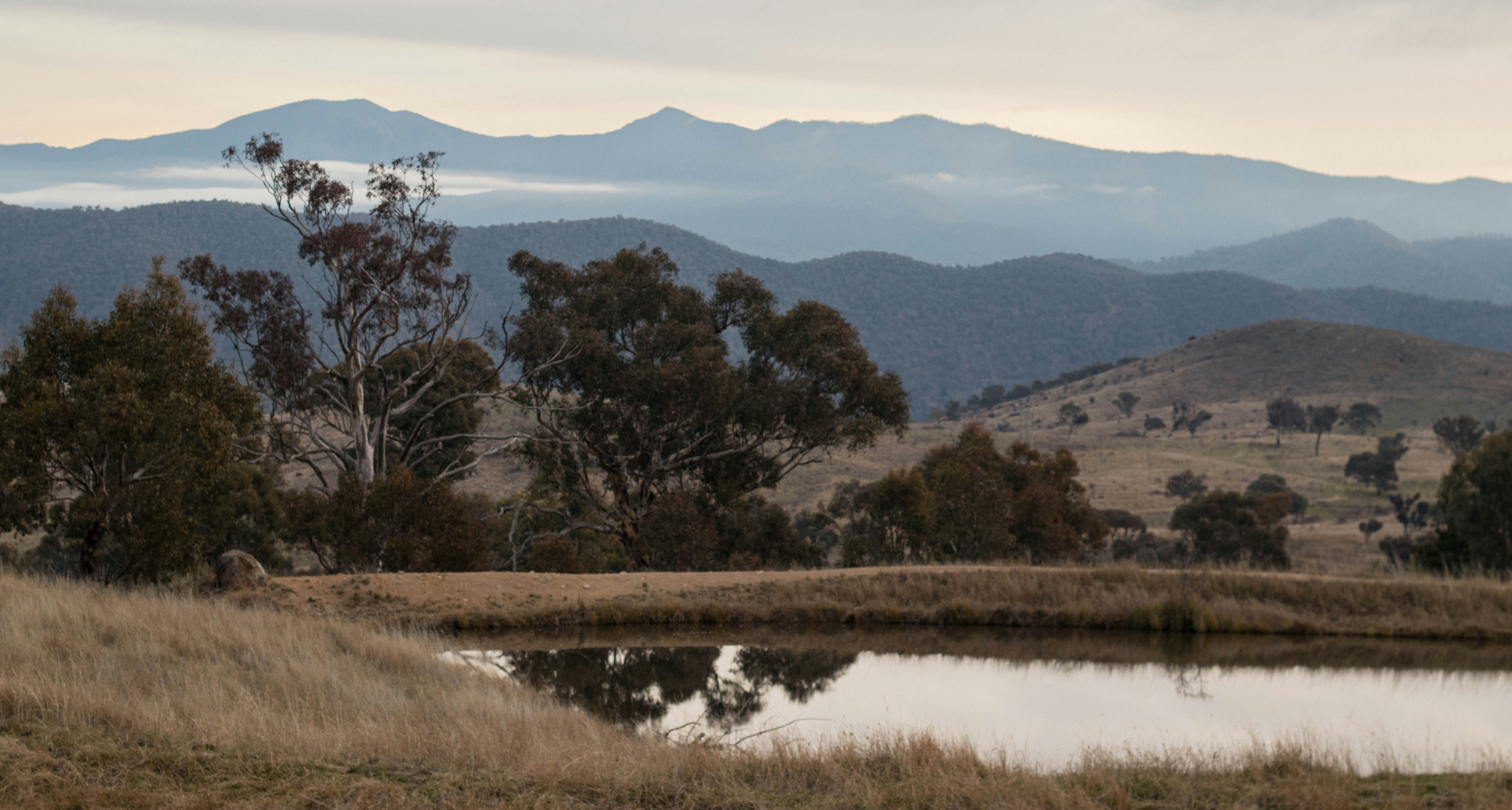
Chosen for the light rather than the location: dry grass, flat water, ranges stacked back into haze under a low sun. Conditions of a landscape once the season has come off the boil — and a fair picture of how much room you get to stand in. A stock landscape, not a place this journal is sending you to.
DOES YOUR TRIP SURVIVE THE TRADE?
Name the peak you are dodging. School holidays, a local event or simply the best weather — the answer changes which weeks are actually quiet.
Count daylight, not degrees. A mild afternoon is no use if the light goes an hour before you finish the drive.
Check the one thing you came for. Ferries, walks, roads and small-town kitchens often run to a season rather than to the calendar.
Ask what closes with the crowd. In thin weeks, fuel, food and beds cluster in fewer towns and shorter hours.
Give every leg a wet-day version. If a day only works in sunshine, it is not a plan yet.
Keep the shape loose. Shoulder trips reward the ability to shuffle two nights rather than defend a fixed order.
01 · DEFINITION
The shoulder is a
window, not a month.
Shoulder season is defined by the peak it sits beside, which is why it moves. In the temperate south it usually means spring and autumn — the stretch after the alpine cold lets go and before summer arrives, then the mirror of it at the other end. In the tropical north there is no four-season calendar to work with at all; the shoulder is the start and the tail of the dry, when the humidity has broken but the visitor season has not yet filled, or when it has emptied and the build-up has not yet closed the days down.
That means the question is never “is October good?” It is: what is peak here, and how many weeks sit either side of it before the thing I came for stops working? Answer that for one region at a time and the shoulder stops being a hunch and becomes a date range you can plan against.
WHAT MOVES WHEN THE PEAK ENDS
Light. Lower sun for longer, which is why photographs taken in the shoulder look like the place rather than like midday.
Crowds. Not absent — redistributed. The famous lookout thins first, the one good bakery last.
Temperature. The extremes come off both ends, and walking becomes an all-day option instead of a dawn one.
Services. Hours shorten, some kitchens shut a day or two a week, and regional transport runs less often.
Risk. Weather is less settled. You are trading certainty for space.
02 · THE TRADE, BOTH DIRECTIONS
Everything the shoulder gives you, it charges for somewhere else.
Nothing about the quiet weeks is free. What follows below is the same trip read twice, one line at a time: what the shoulder hands you, and the invoice that comes with it. Five gains, five prices — they do not cancel each other out, they simply have to be read together before you move a single date.
HOW TO READ THE LEDGER
Every line runs in one direction and then turns back on itself: the thing the quiet weeks give you, then the price on the same row. Read the pair. Half a line is how people end up surprised in the first week of October.
Five gains, five prices, one row at a time.
Room to move. Pullouts, campsites and short walks stop being a competition, and a spontaneous second night somewhere becomes possible again.
THE PRICE Settled weather. A run of three clear days is luck rather than the default, and coastal conditions rewrite the day more often.
Better hours of the day. Long soft light at both ends, and middays you can actually use rather than wait out in the shade.
THE PRICE Daylight. In the southern shoulder the useful day is noticeably shorter, and it shortens the drive before it shortens anything else.
A truer version of the place. Towns running at their own pace tell you more about themselves than towns running at capacity.
THE PRICE Services and frequency. Fewer kitchens open, shorter roadhouse hours, and regional connections on a reduced timetable.
Slack in the budget. Demand off the boil generally means more choice for the same money and less pressure to lock things in early.
THE PRICE Certainty about access. Roads and tracks at the edges of a season are recovering from, or heading into, the conditions that close them.
Kinder driving. Quieter highways, fewer caravans on the climbs, and more of the road to yourself on the long inland legs.
THE PRICE Water that lags the air. The sea is often at its coldest well after the land has warmed up, and the reverse in autumn, so the swim you pictured may not be on.
IF THE LEDGER BALANCES
Two of these prices are easier to plan for than to argue with. The money one and the weather one each have a standing guide behind them.
03 · TWO DIFFERENT SHOULDERS
The north trades
humidity. The south
trades daylight.
In the tropical north the year is one long argument between wet and dry, and the shoulder sits at the joins. Early in the dry, the country is still green from the rain, waterfalls are running hard and the crowd has not arrived — but humidity lingers, some roads and swimming holes stay closed while conditions settle, and the heat still decides what time you walk. At the far end of the dry the opposite applies: the roads are all open and the visitors have gone home, but the build-up is starting, afternoons get heavy, and the landscape is at its driest and dustiest.
In the temperate south the shoulder is gentler and the compromise is arithmetic. Autumn and spring hand you comfortable walking temperatures and the best colour of the year, and take back a good slice of your usable afternoon. Alpine and inland routes can still deliver a cold snap or a hot northerly in the same week. Coastal water lags the air by weeks in both directions, so an autumn beach day is usually warmer to swim in than a spring one that feels identical on land.
Trips that cross both halves of the country in one run are where this goes wrong. There is no single month that suits the Top End and Tasmania equally, and choosing the average leaves you with the weaker version of each.
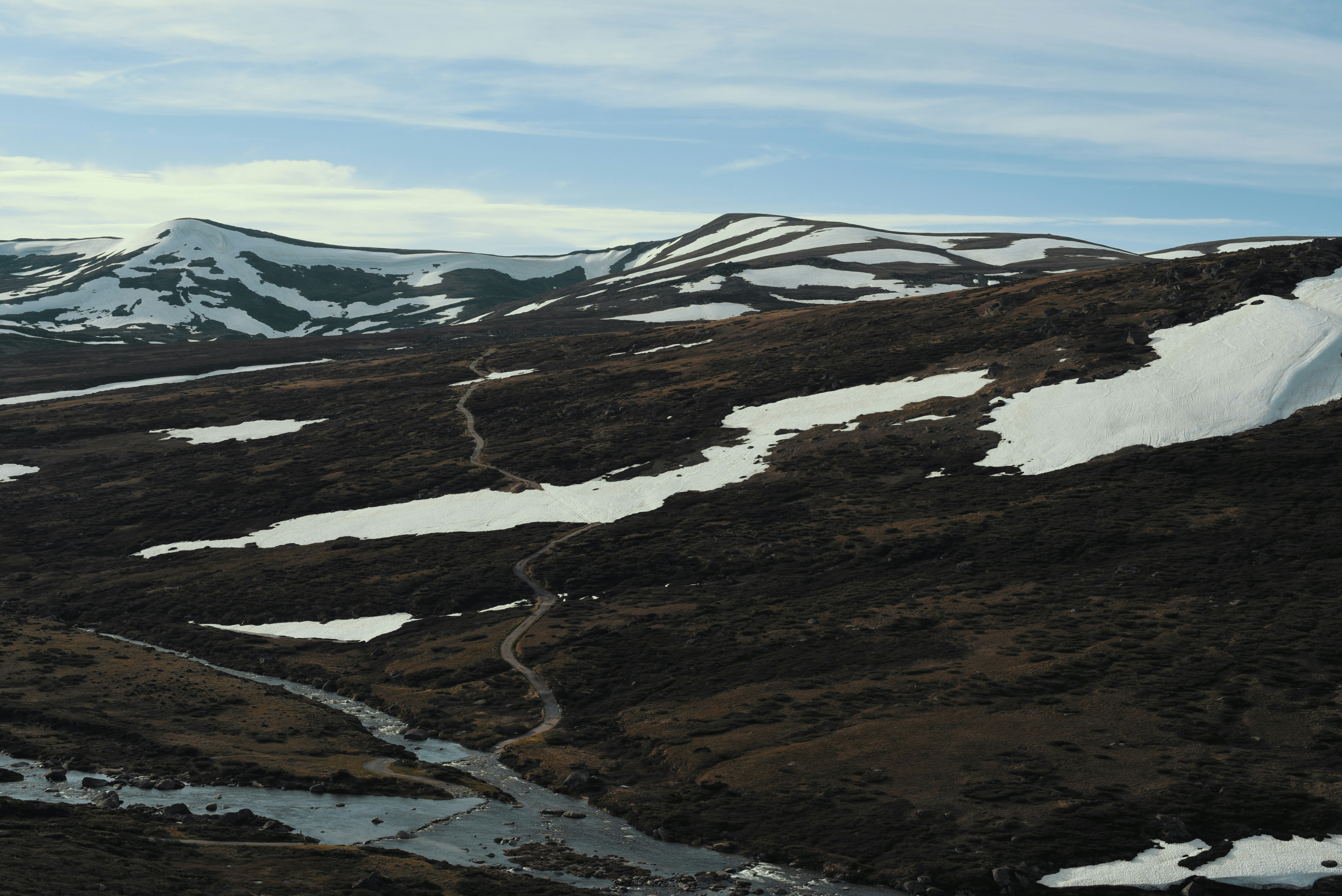
South — the edge of the southern season: snow still lying on the high slopes, meltwater running, and walking temperatures you would pay for in midsummer, bought back with an afternoon that ends early. Illustrative stock landscape, not a specific track we are pointing you at.
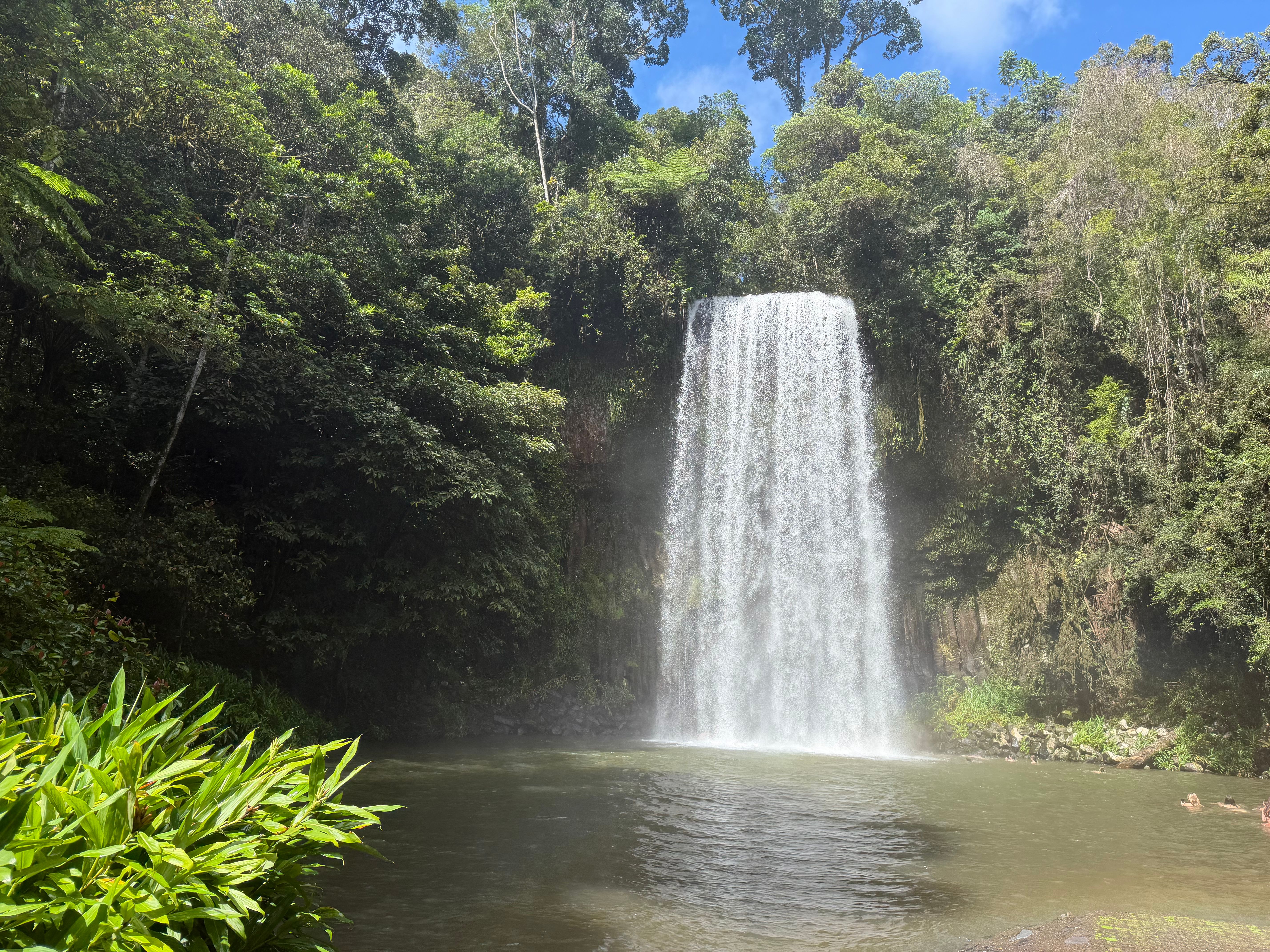
North — the other shoulder: water still running hard through tropical forest at the ends of the dry, before the visitor season fills or after it empties, with humidity and heat still deciding what time you walk. Illustrative stock landscape, not a specific place we are pointing you at.
04 · FOUR QUESTIONS BEFORE YOU MOVE THE DATES
Ask these in order, and the answer stops being a preference.
01
Is the trip anchored to one thing?
A trip built around a single walk, crossing or stretch of water lives or dies on whether that one thing is running. A trip built around a region absorbs a closure without much pain. Anchored trips belong closer to peak; loose ones belong in the shoulder.
02
How much daylight does the plan need?
Add up the driving, the walking and the hour you want at the end of the day doing nothing. If that total needs a summer evening, the southern shoulder will quietly cost you a stop per day.
03
Who is in the car?
Solo and small-group travellers can rewrite a day at breakfast, which is exactly the flexibility the shoulder asks for. Families tied to term dates often cannot, and are better served by planning around the crowd than by trying to miss it.
04
What happens if it turns?
Name the wet-day version of each leg before you leave. If two days in a row have no indoor, sheltered or shorter alternative, the itinerary is the problem, not the season.
05 · WHERE THE SHOULDER SITS
Read it region by region.
Travelling in Tasmania and Victoria. The clearest southern shoulder: comfortable walking weather, autumn colour and alpine roads open, against short days and genuinely changeable conditions.
Travelling in Queensland. A state with two calendars in it. The tropical north and the south-east reach their quiet weeks at different times, and treating them as one destination is the common error.
Travelling in the Northern Territory. The ends of the dry are the trade: green country and no crowd early, open roads and empty campgrounds late, humidity at both edges.
New South Wales and South Australia. Coast, ranges and wine country all shift their peak separately, so the shoulder here is a matter of which part of the state you are actually driving.
Travelling in Western Australia. The south-west and the north-west peak at opposite ends of the year, which makes a single shoulder trip covering both a compromise rather than a saving.
KEEP READING
When to Go: Seasons and Timing — the full treatment of weather, daylight and crowd patterns.
Planning Around School Holidays — what to do when the dates are not yours to move.
Trip Planning Basics — turning a window into a workable outline.
Outback and Red Centre — why the interior rewards a different pace and a different month.
Budgeting a Trip — where the savings of a quieter week actually land.
QUESTIONS AND CORRECTIONS
Ask the timing question
this entry left open.
If this entry left a question open — a region you are weighing against a particular set of weeks, or a trade we have skipped over — the enquiry form is where to put it. We answer in writing, as a journal, and we do not plan, price or book trips.
Seasonal detail dates fastest, so timing questions and corrections go through the contact form and are checked against the published source before a line changes.
WHAT THIS PAGE IS FOR
Trips and Tours is an independent journal. We publish guidance for people planning their own travel — nothing here is a departure, an offer or a schedule, and no route on this site is sold.
If this entry helped you settle a date, the standing guides in Guides and Topics are the next stop, and How We Research and Write explains how each of them is put together.