An independent travel journal — go when the country is at its best.
Questions, corrections, story notes
Pack for the
nights, not
the postcard.
Most Australian trips are packed for the brightest hour of the brightest day and then spent shivering at a lookout after sunset. Packing and Preparation is the standing guide to getting the bag and the pre-departure week right: what the container should be, how many layers a swinging climate actually needs, which documents want a backup, and what to leave on the bed at home.
It is written to be read once, argued with, and then reused every trip — no brands recommended, no kit lists you have to buy your way into.
The average
temperature is
nobody's day.
Inland and alpine Australia can move twenty degrees between midday and midnight, and coastal wind can undo a warm forecast in ten minutes. Pack for the two ends of that range rather than the middle, and the middle takes care of itself.
Practically, that means fewer heavy items and more thin ones, a windproof shell that lives in the day bag instead of the boot, and one warm layer you would feel silly carrying in January — right up to the first cold evening.
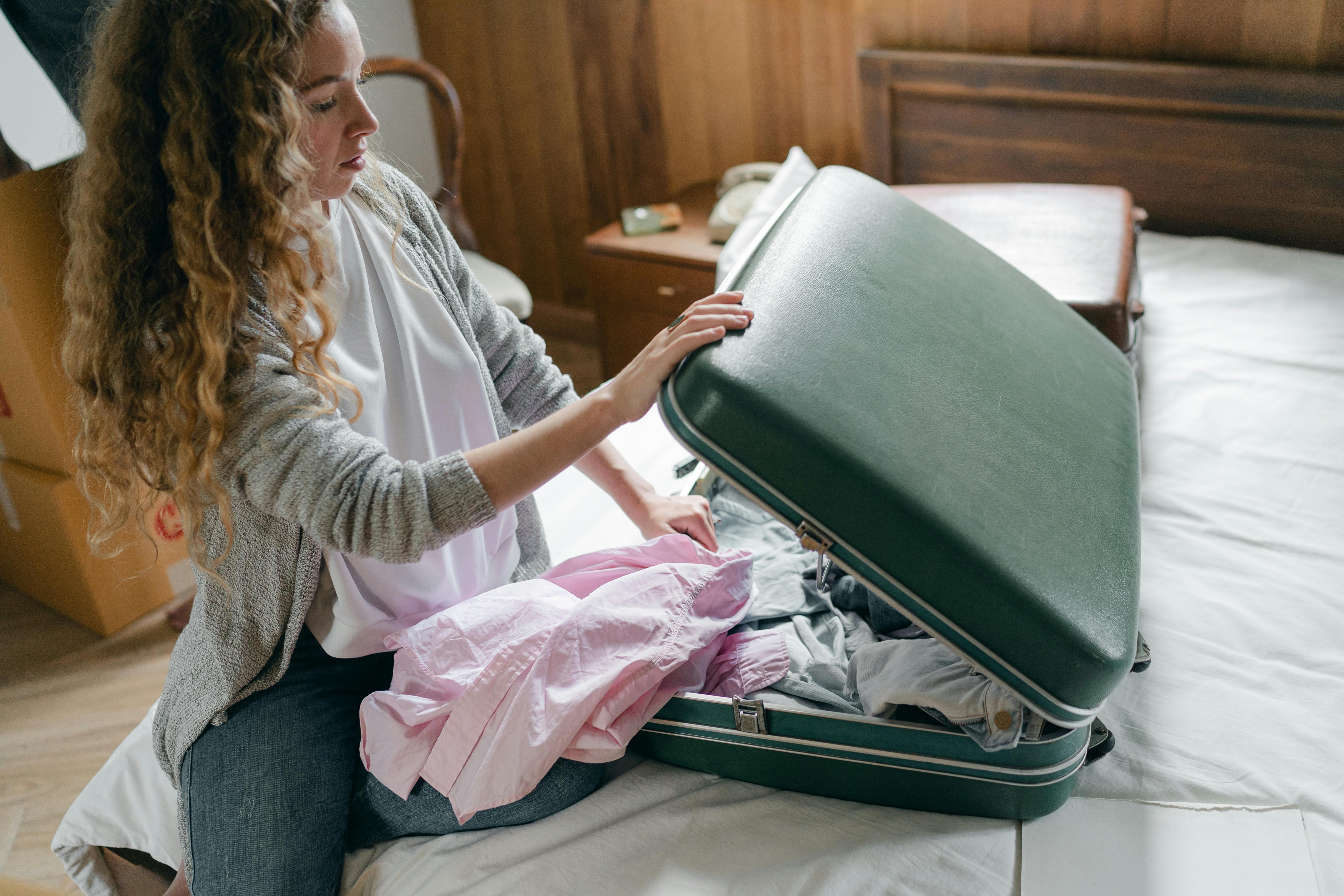
Both ends of the range are decided at home: thin tops that combine, one warm spare kept sealed, and a shell packed where it can be reached rather than at the bottom of the bag.
The bag decides
how you travel.
Size is the least interesting question. What matters is how the bag behaves at the moment you use it: lifted into a roof rack, dragged over gravel, opened on a bunk, or repacked in the dark at a pullout.
Road trips
A soft duffel or two beats one rigid case: it moulds into a loaded boot and can be lifted with one hand. Keep a small day bag on the back seat with water, snacks, sun protection and the warm layer, so the main luggage stays shut between overnight stops. Related reading: Australian Road Trips.
Coast and reef trips
Salt, sand and damp swimwear govern everything. A dry bag or two lightweight waterproof pouches keeps electronics and documents separate from wet gear, and quick-drying fabrics save you carrying yesterday’s towel. A rash top earns its space on the water more often than a second pair of shoes. See Coast and Reef.
Inland and remote trips
Dust gets everywhere, so closed containers beat open pockets and a sealed box for food and first aid stays clean. Water capacity, shade and a means of covering up matter more than wardrobe choice. Read the conditions first in Outback and Red Centre.
Four thin layers
outperform two
thick ones.
Build the wardrobe as a rotation rather than a set of outfits. Everything should work with everything else, in one colour family, so a cold morning is solved by adding rather than repacking.
Base
Two or three light tops that dry overnight in a room or a tent. Merino or synthetic; cotton stays wet.
Mid
One fleece or light knit — the layer that does the most work between four in the afternoon and nine in the morning.
Shell
A wind and rain layer that packs down small enough to live in the day bag, not in the luggage.
Warm spare
One genuinely warm item, kept sealed. It is dead weight for most of the trip and indispensable for one night of it.
Footwear sits under the layers, not in them. One pair worn in, one pair that can get wet — settled separately from the four-layer rotation above rather than counted inside it. Blisters end more walking days than weather does.
Two things fail
quietly: the papers
and the battery.
Both are settled in one evening at home, and neither can be repaired once the coverage drops out. Everything below is a home task, not a roadside one.
Paperwork with a backup
Licence, identification and any permits needed for parks or remote roads are worth checking before you leave rather than at the gate. Keep insurance details and the number you would actually call saved offline, photograph everything important so it can be reached without a signal, and leave one paper copy in a different bag from the original. Vehicle registration, roadside assistance and hire paperwork travel together in the glovebox, and a written note of medications and allergies covers everyone in the car, not just the driver.
Charging and navigating offline
Download maps for the whole region before departure — coverage disappears well before the scenery does. One power bank that can refill a phone twice, charged the night before rather than the morning of, carries an ordinary day; a spare cable is worth more than a spare battery, because cables are what fail. Keep a headlamp or torch with fresh batteries somewhere you can find it in the dark, not at the bottom of the main bag.
Before the
last town
Tell someone the route and when you expect to be back if you are heading beyond mobile coverage.
Fill water and fuel where you can, not where you intended to.
Read the conditions first in Outback and Red Centre.
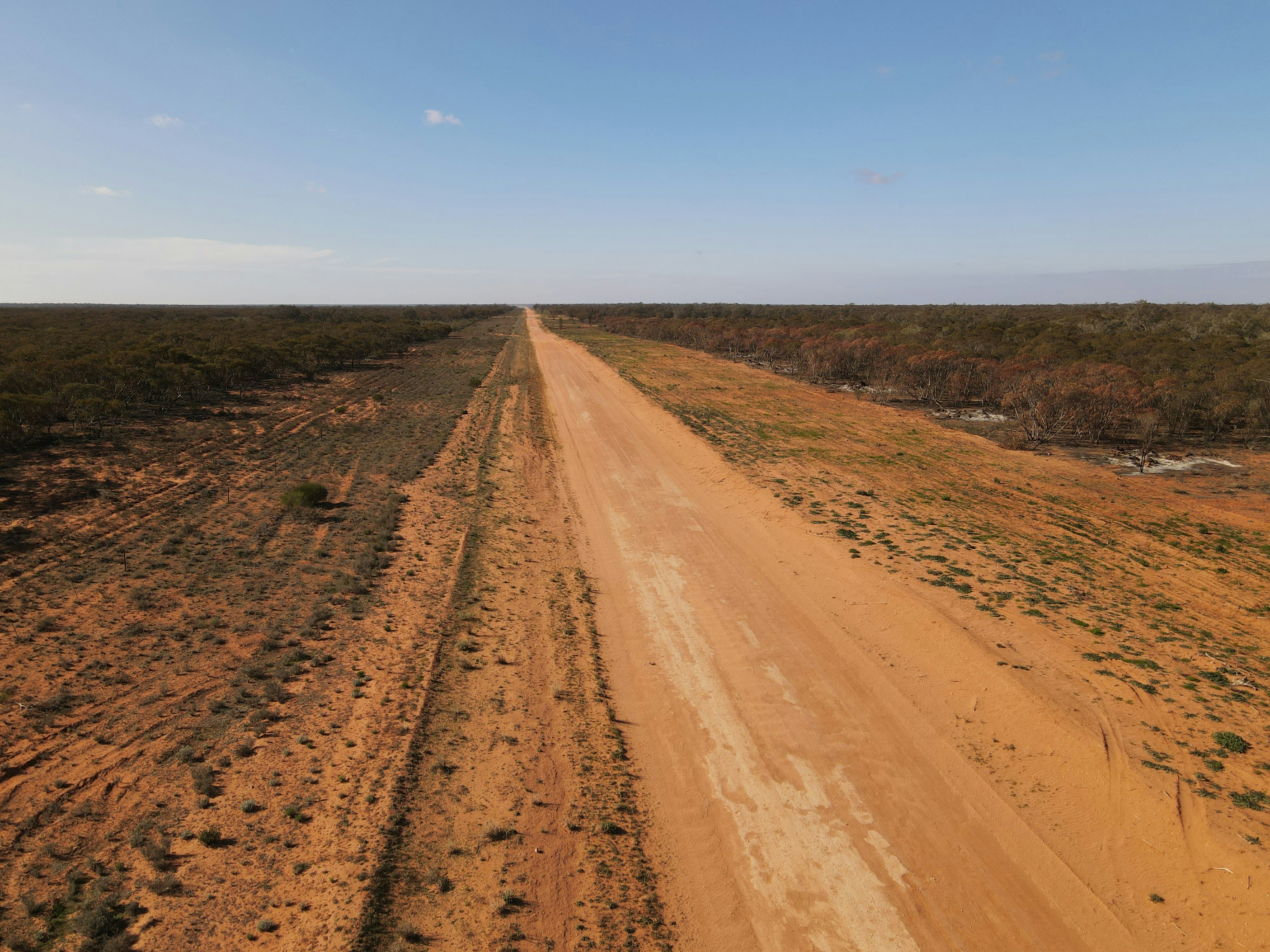
Long unsealed stretches are where a spare litre of water and a sealed first-aid box stop being optional.
Sun, insects
and a small
first-aid box.
Australian sun is stronger than most visitors expect and works through cloud, water and car windows. A broad-brimmed hat, sunglasses, a long-sleeved light shirt and sunscreen you reapply are cheaper and more reliable than any recovery plan. On the water, cover up rather than relying on chemistry alone — it is better for the reef as well as for you.
Insects vary by season and region: repellent, a long layer for dusk, and a fly net for inland summer make the difference between an evening outside and an evening in the car.
Keep first aid small and sealed — blister care, antiseptic, tape, painkillers, rehydration sachets, tweezers, personal medication with a little extra. In remote country, add water beyond what you plan to drink and a compression bandage. Learning how to use what you carry matters more than carrying more.
Lower-impact choices belong in the bag too: a refillable bottle, a reusable cup and a bag for your own rubbish. See Travelling Responsibly.
What to leave
at home, and
when to stop.
Leave behind the third pair of shoes, the outfit for the restaurant you have not chosen, the hardback, the duplicate chargers and anything you would be upset to lose. Packing differs by company as much as by climate: solo travellers should carry what they can lift and walk with unaided; families win back hours by giving each child one small bag they own; groups should agree who carries the shared items rather than each bringing their own.
More on that in Travel Styles: Solo, Family, Group.
One week out
Check the forecast for every region on the route, not just the first. Confirm any permits, ferry or park access. Book the car service if the trip is long. Read the season you are travelling into in When to Go: Seasons and Timing.
Two days out
Lay everything on the bed, then remove a quarter of it. Download maps and anything you want to read offline. Copy documents. Check tyres, spare, fluids and the jack if you are driving.
The night before
Charge everything, fill water bottles, pack the day bag separately, and set out the warm layer and sun protection where you will actually reach for them. Then go to bed — an early start is worth more than a perfect bag.
Preparation is the
cheapest part of
any trip.
The last three columns are the stepped index out of this chapter: what to read before the bag is packed, what the journal argues about weather and distance, and where to send a correction.
Standing guides
The item we left out
Name the thing you would never travel without and we will argue about whether it earns its space. Corrections to a climate you know better than we do are checked before the next revision.