An independent travel journal — go when the country is at its best.
Questions, corrections, story notes
Published September 2026
Small state.
Four climates.
One day's driving.
Victoria is the state where Australian distance stops being the main character. Almost everything worth stopping for sits within a day of Melbourne, which means a week here can hold a coastline, a mountain range and a goldfields town without any of them feeling rushed. The trade is weather: this is also the corner of the country most likely to hand you three seasons between lunch and sunset.
This page sets out how the state divides — surf coast, high country, goldfields and inland towns, food and wine districts, and a capital built for short breaks — along with the windows that suit each one and the packing habit that makes all of them easier.
THE SCOPE OF THIS PAGE
Scale. Melbourne to the Murray, to the alps, or to the South Australian border — each is a single sitting behind the wheel rather than a multi-day haul.
Coast. A southern, cool-water shoreline of cliffs, surf beaches and river mouths, at its most comfortable from late spring to early autumn.
High country. Genuine cold-climate roads that change purpose with the season — snow in winter, wildflowers and clear passes in summer.
Inland. Goldfields towns, wide plains, and food and wine districts that reward slow, short hops.
The city. A capital that works as a two- or three-day window, paired with the region behind it.
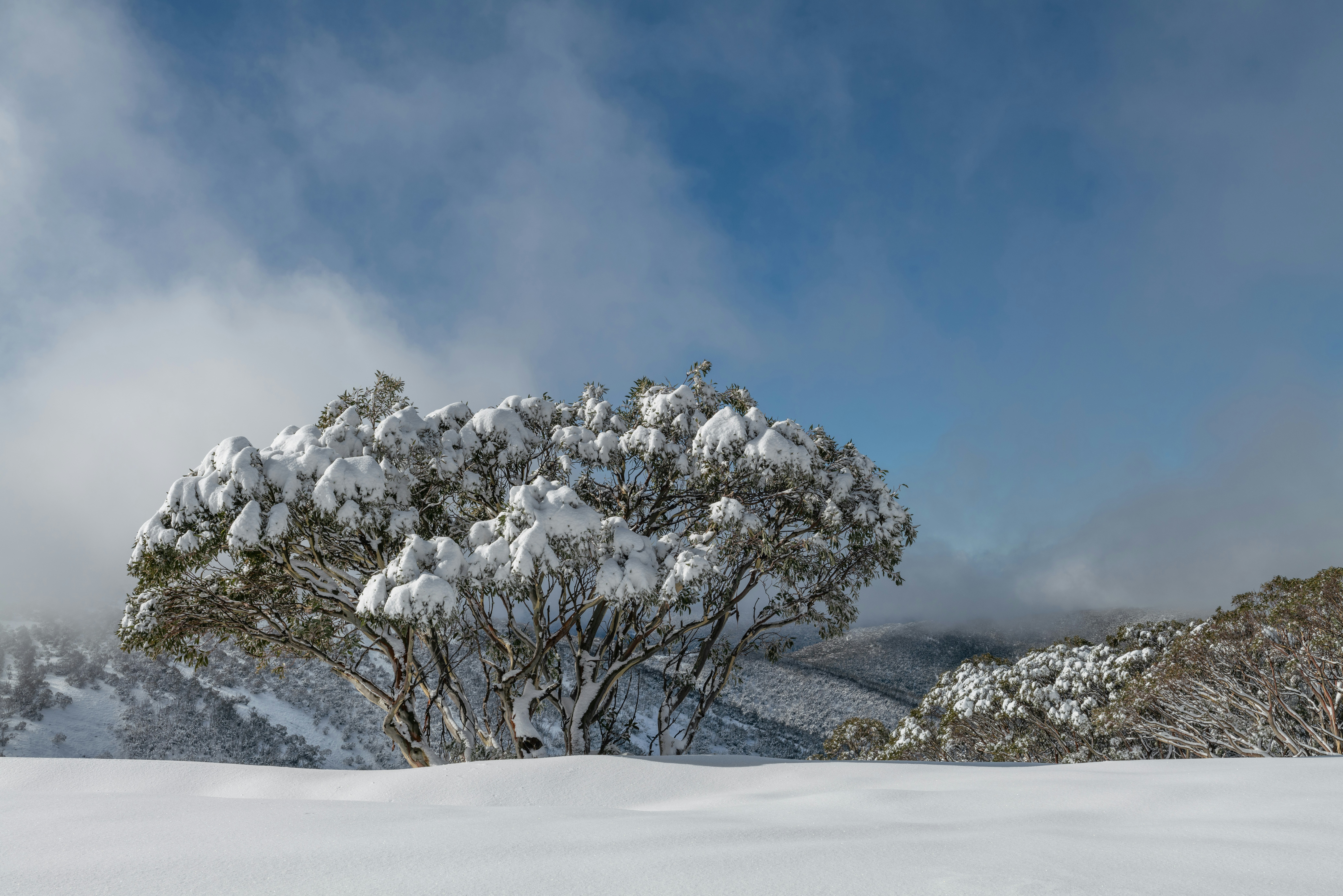
Winter turns the ranges into a different state entirely: snow held on the slopes, roads managed for it, and a calendar that runs opposite to the coast.
The state you can cross before dinner
Elsewhere in Australia the plan is built around the driving. In Victoria the driving is the connective tissue between the days you actually came for. That changes the planning instinct: instead of asking how far you can get, ask how many nights each stop deserves before the next one starts pulling.
The practical consequence is that Victoria forgives short trips. A long weekend can genuinely include a coast road and a night inland. It also punishes over-scheduling, because the map looks so manageable that people stack five bases into six nights and spend the trip packing. Two or three bases, with day trips fanning out from each, is almost always the better shape here.
Related reading: How Far to Drive in One Day · Trip Planning Basics
HOW THE DAYS TEND TO SPLIT
The coast road. Short in kilometres, long in hours. Cliff-top touring routes are for stopping, not covering — assume half the pace the distance suggests.
The inland highways. Fast, flat and dull in the best way. Use them to reposition between regions, not to sightsee.
The mountain roads. Steady climbing, tight corners, and a real chance of fog or ice in the cold months. Budget daylight generously.
The city run. Traffic, not distance, is the variable. Arrive and leave outside peak hours and the same trip halves.
Cold water on one side, cold air on the other
Victoria’s two signature landscapes sit a few hours apart and want opposite months. Deciding which of them the trip belongs to is the first useful decision: the window, the packing and a sensible daily driving target all follow from it, and trying to serve both at once is what turns a relaxed week into a run of transfer days.
The southern coast
A Southern Ocean shoreline of limestone cliffs, surf beaches and river mouths, most comfortable from late spring to early autumn and at its emptiest mid-week. Swimming is a decision here rather than a default. Wind is what catches people out: twenty degrees on an exposed headland behaves like fifteen, and the lookouts are all exposed headlands. Three nights in one coastal base beats three towns in three nights.
The high country
Effectively two regions six months apart. Winter is snow country and the roads are managed for it; summer and early autumn open the passes, the walking and the river valleys. The altitude difference is the surprise — shirt sleeves at the bottom of the hill and genuinely cold at the top of the same road — and mountain daylight goes behind a ridge long before the sun sets, so plan fewer kilometres and earlier stops.
Read alongside: Coast and Reef · Australian Road Trips
CHOOSING BETWEEN THEM
If the trip is one weekend
Pick one half and stay inside it. A single coastal base, or a single mountain town, will out-perform an attempt at both.
If the trip is a week
Both fit, because the drive between them is one sitting. Give each half two or three nights and count the transfer as a day, not a morning.
If the weather decides it
Autumn is the one window that treats both halves kindly: settled light on the coast, open passes in the mountains, and the inland heat gone.
The forecast is a suggestion, so pack in layers
Victoria’s reputation for changeable weather is earned honestly. Cold fronts arrive from the south-west across open water with very little standing between them and the coast, which is why a still, warm morning can become a grey, blowing afternoon without much warning. Inland it swings the other way — hot days, cool nights, and a wide gap between the two in the same twenty-four hours.
None of this makes the state harder to travel; it makes one packing habit non-negotiable. Carry a warm mid-layer and a genuinely windproof outer layer every month of the year, and treat anything you can strip off at a lookout as more useful than the single heavy coat you have to carry all day.
Plan on this basis and the weather becomes a texture rather than a problem: the coast is at its most dramatic when the front comes through, and the light after it clears is the reason photographers keep coming back.
WHAT A FRONT ACTUALLY CHANGES
On the coast. The wind arrives before the cloud does. A sheltered beach and an exposed headland twenty minutes apart can feel like different months, and the lookouts are always the exposed ones.
In the high country. Height does most of the work: the same road can be shirt-sleeve warm at the bottom and genuinely cold at the top, with cloud closing over a pass faster than the map suggests.
Inland. The swing runs between day and night rather than hour to hour — warm afternoons, cool evenings, and a mid-layer you will want after dark in almost any month.
Related reading: Packing and Preparation · Packing for Changeable Weather
Behind the coast: goldfields, vineyards and the capital
THE THREE PARTS BEHIND THE COAST
The three parts of Victoria that sit behind the coast and below the alps — each of them a short hop from the last, and all three better in autumn and spring than at the height of summer.
Goldfields and inland towns
Nineteenth-century money left Victoria a run of inland towns built far grander than their present size — wide main streets, stone civic buildings, botanic gardens laid out for a boom that ended. They sit close enough together to string two or three into a slow loop, and they are at their best in autumn and spring when the inland heat is off.
Food and wine districts
Several of the state’s growing regions sit within an easy morning of the capital, which makes them unusually easy to visit badly — a long day of driving between too many stops. Treat one district as a base for a night and the whole thing relaxes: shorter hops, someone else driving where you can arrange it, and time for the towns rather than only the cellar doors.
The capital as a short break
Melbourne rewards a two- or three-day window better than a week, because its pleasures are laneways, galleries, markets and neighbourhoods rather than a checklist of monuments. The strongest version pairs a short city stay with one region behind it — the coast, the ranges or a wine district — so the trip has both a pace and a contrast.
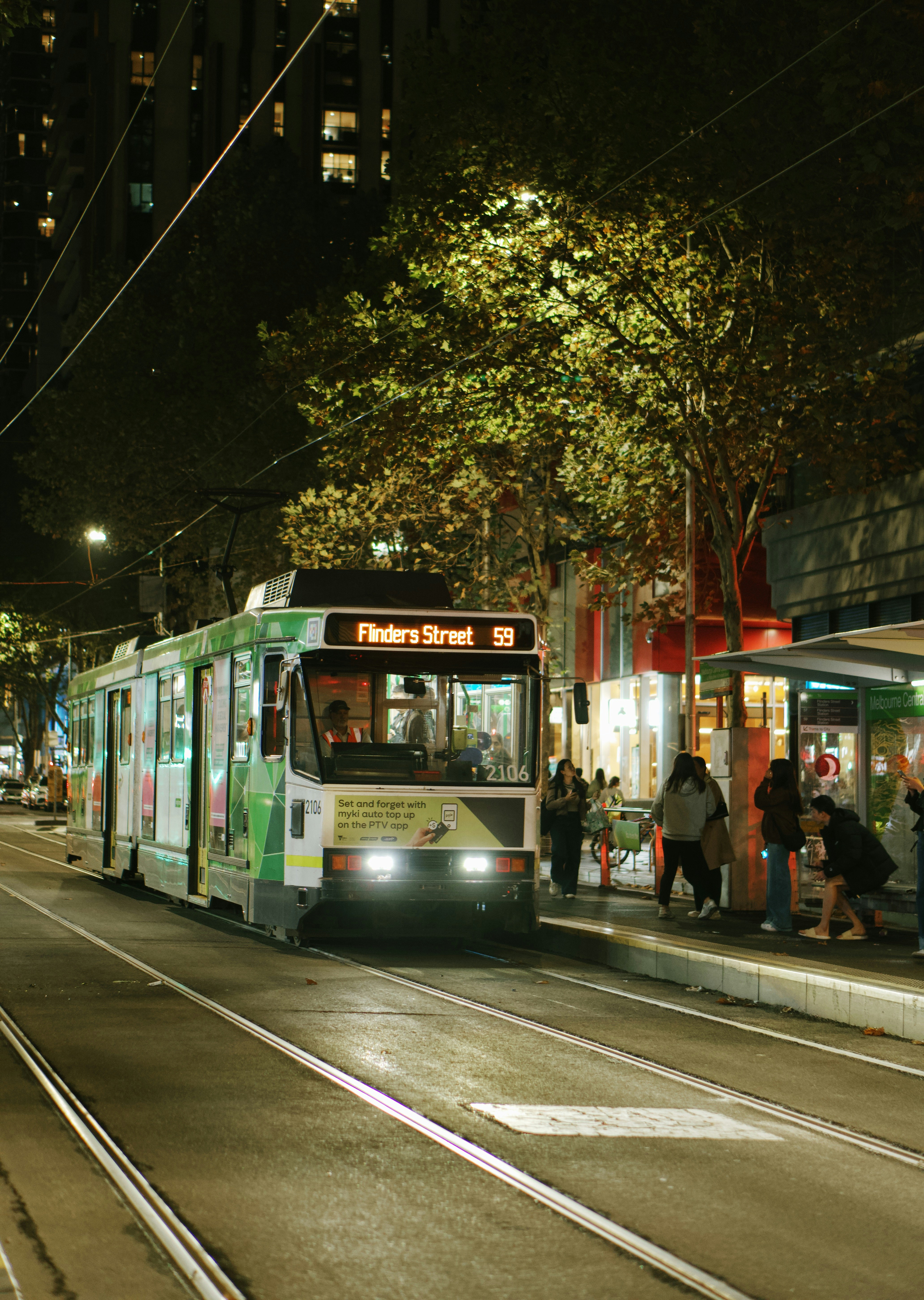
Wet tracks after dark: a capital read on foot and by tram is what a two- or three-day window is actually for.
Reading the year, not the month
There is no single best month for Victoria, because the coast and the mountains want opposite things. What there is, reliably, is a set of trade-offs: daylight against crowds, warmth against wind, and school holiday periods that fill the coastal towns and the snow towns in different halves of the year.
Decide which half of the state the trip belongs to first. The window follows from that, and the rest of the planning stops fighting itself.
THE TRADE-OFFS, SEASON BY SEASON
Summer. Longest daylight and the warmest water the south offers, against the busiest coastal towns of the year and hot, dry inland days. Best used for long evenings rather than long drives.
Autumn. The quiet favourite. Settled light, thinning crowds, open mountain roads and inland towns at their most comfortable — the window most readers under-book.
Winter. The high country’s whole reason for existing, with managed snow roads and cold, short days. On the coast, dramatic and largely empty; pack for wind first and rain second.
Spring. Green country, unsettled skies and genuinely unpredictable fronts. Good for inland and goldfields touring, and the season that most rewards the layered packing habit.
Where to read next
Victoria sits neatly beside its neighbours. Cross the border west and the pace opens out in South Australia; head north-east and the coastal spine of New South Wales takes over; take the boat or the short flight south and Tasmania repeats the cool-climate logic at half the scale. The full set of state and territory guides lives in Regions We Cover.
For the mechanics rather than the map, start with Trip Planning Basics, then Budgeting a Trip and Travel Styles: Solo, Family, Group for how the same Victorian week changes depending on who is in the car. If the trip runs through the high country or protected coastline, Travelling Responsibly is worth ten minutes first.
WRITING BACK
A page holds still and Victoria does not: passes shut, a coastal town changes hands, a favourite walk gets rerouted. Anyone who drives these roads more often than we do knows a detail this guide has not caught yet — name the paragraph and what it should say, and we will check it against sources we can reach before touching the text. How that checking works is set out in How We Research and Write.