An independent travel journal — go when the country is at its best.
Questions, corrections, story notes
Chapter 03 · Australian Road Trips
Kilometres on
a map, hours
on the road.
Australian distances are honest on paper and misleading in practice. This hub is about the difference: what a long drive actually asks of a day, why the best routes are the ones you halve, and how coastal, alpine and inland driving each behave differently once you are past the last set of traffic lights.
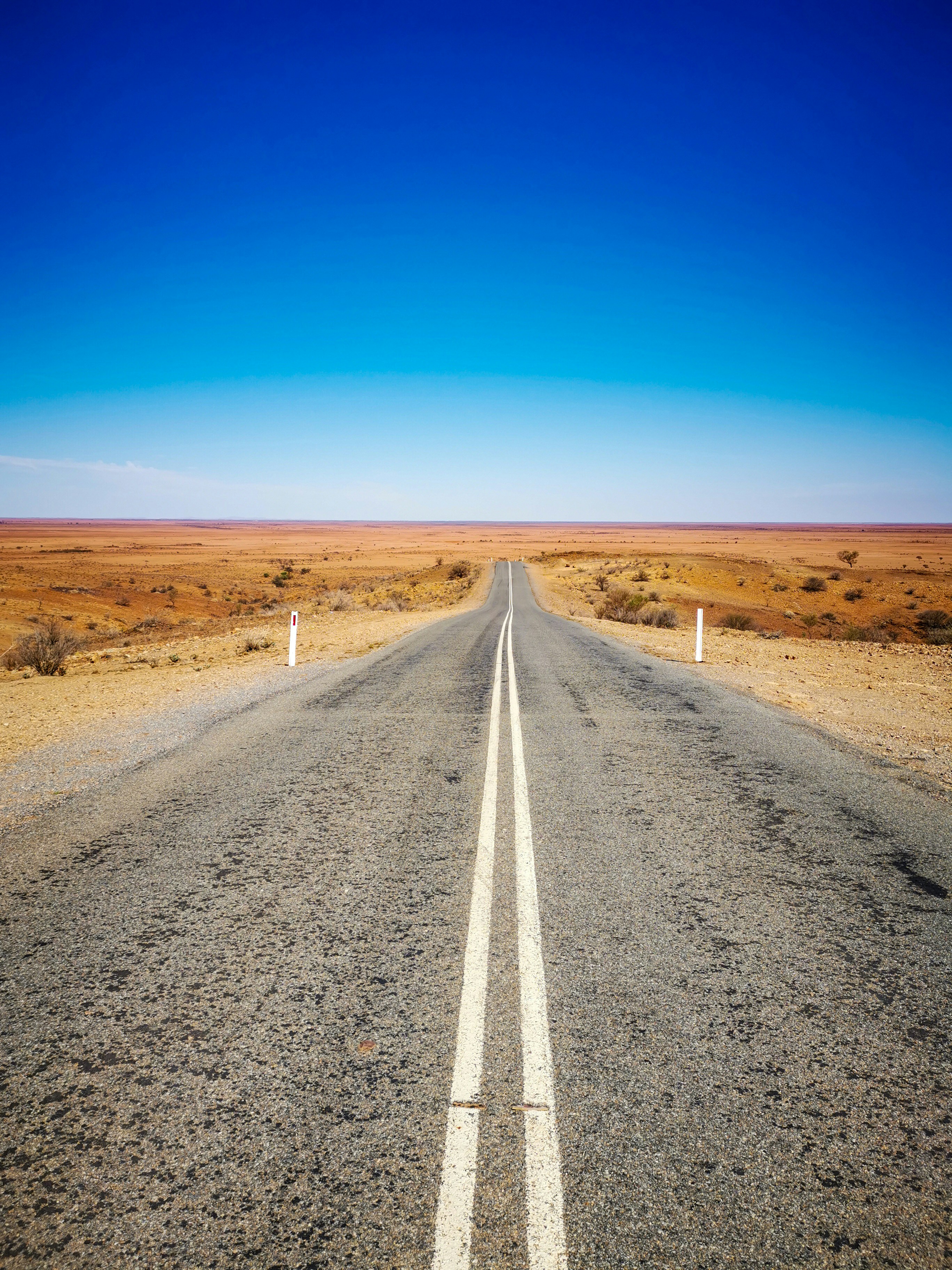
A sealed two-lane road running flat across desert plain — the kind of empty stretch where the checklist beside it stops being theoretical.
BEFORE THE FIRST LONG DAY
A checklist that
travels well.
- Refuel where you can, not where you must — top up at three-quarters rather than at the warning light.
- Carry more drinking water than the drive should need, and keep it in the cabin where you will actually reach for it.
- Save maps offline before the town where reception starts to thin.
- Put your longest stretch early in the day, while attention is cheap.
- Know the spare, the jack and the tyre pressure the surface asks for.
- If the route leaves the highway, tell someone which road you took.
DISTANCE
How distance behaves once you are inside it
A routing app returns a number that assumes you never stop, never queue behind a caravan on a single-lane climb, and never pull over because the light has gone gold on a paddock. Real driving days lose an hour to lunch, an hour to a lookout that turned out to be worth it, and twenty minutes to a town you did not plan to like.
The fix is not to drive faster. It is to set an honest ceiling before you leave and treat it as fixed. Most travellers find the day sours somewhere past five hours behind the wheel; past that, the country outside stops registering and the trip becomes transport. Half of what makes an Australian drive memorable happens at the pace of stopping.
THREE WORKING RULES
The honest ceiling. Decide the most driving you want in a day, then plan the route to sit under it — not to meet it exactly.
The halving test. If a stretch looks like a full day of driving, ask what it would gain by being split across two. On the best routes, the answer is: everything.
The unplanned stop. Leave one slot a day unspent. Roadside produce, a river crossing, a lookout with no name on the map — the stop you did not plan is usually the one you retell.
CHARACTER
Coastal, alpine, inland: three different days
Same country, same licence, three unrelated rhythms. Matching the route to the kind of day you want is more useful than matching it to a headline drive.
Coastal
Short distances, long days. Stops are dense, average speed is low, and headland roads reward the driver least and the passengers most. Plan half the kilometres you think you can manage and read Coast and Reef for what the water is doing when you get there.
Alpine and high country
Elevation rewrites the forecast and the timetable. Cold, cloud and narrow shoulders slow everything; light disappears early behind ridgelines, and some roads carry seasonal conditions worth checking before you commit. Fuel and food are sparser than the map’s town names suggest. Travelling in Victoria and Travelling in Tasmania cover the two most driveable versions.
Inland and unsealed
Spacing is the whole subject: services measured in hundreds of kilometres, heat that shortens tempers and tyres, corrugations that set a speed for you. The interior asks for a different pace and a different vehicle conversation — see Outback and Red Centre.
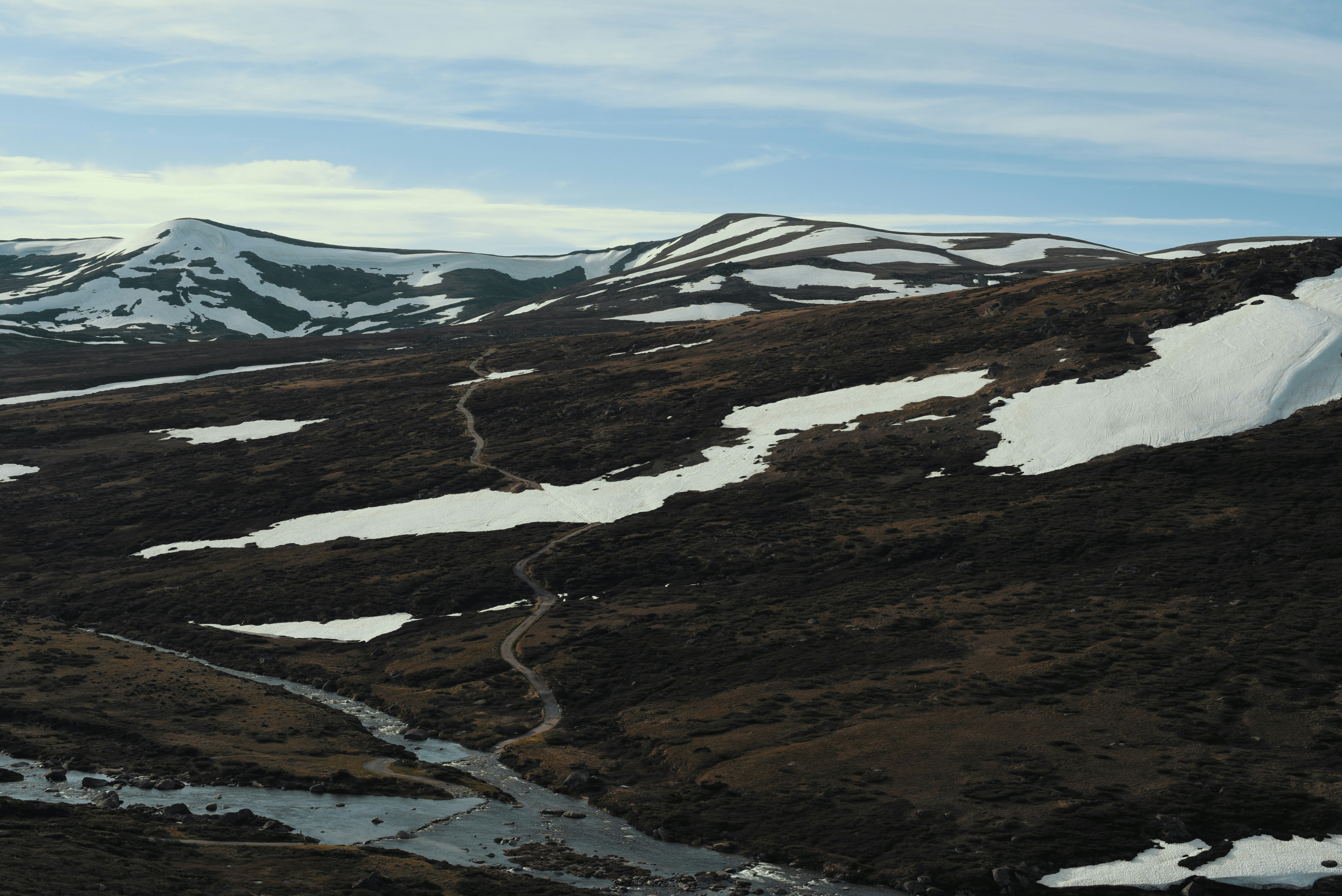
Snow still lying on the high slopes, with no bitumen in the frame: alpine crossings are where a driving day slows to shorter legs, colder starts and roads that close with the season.
SPACING
Fuel, water and rest
On long inland and remote stretches, service spacing sets the shape of the day more than scenery does. Work forward from the next certain fuel stop rather than backward from where you hoped to sleep, and assume opening hours in small towns are shorter than a city habit expects.
Rest works the same way. A stop every couple of hours — out of the seat, not just off the accelerator — is the cheapest safety measure available, and driver changeovers are easier to keep to when they are attached to fuel stops.
LIGHT
Dawn, dusk and the wildlife hour
The first and last hour of daylight are the best hours to look at Australia and the worst hours to drive through it. Kangaroos, wombats and stock move at exactly the time your eyes are adjusting and the sun is low in the windscreen.
The workable compromise is to be parked for both: on the road shortly after first light has settled, off it well before dusk. It costs nothing, removes the most common regional hazard, and hands you the good light as something to stand in rather than steer through.
ONE ROAD WE HAVEN’T WRITTEN YET
The road you
know better
than we do.
Every driving page here began as a road somebody argued about: a detour worth the extra day, or a leg that reads fine on the map and drives badly. If you have driven something this chapter handles thinly, the month you drove it and what caught you out are the parts we can use. Name the road and the sentence that is wrong: corrections are checked against the published source before a line changes.
CARRY THIS PAGE FORWARD
Three ways this
chapter continues.
Before you draw the route
How Far to Drive in One Day sets the ceiling in hours rather than kilometres, and Trip Planning Basics turns that ceiling into a spine of nights.
Before you load the car
Packing and Preparation for a boot you can still open at dusk, Budgeting a Trip for where fuel, nights and food actually land, and Travel Styles: Solo, Family, Group, because who is in the car decides every stop you make.
Once the road has a region
Regions We Cover reads the driving state by state, When to Go: Seasons and Timing fixes the month before the route, and Travelling Responsibly is about spending in the towns you stop in.