An independent travel journal — go when the country is at its best.
Questions, corrections, story notes
Six hours is
a long day.
Eight is a gamble.
A route looks reasonable on a map because the map is only measuring movement. It is not counting the fuel stop that turns into lunch, the lookout you actually pull into, the fifteen minutes behind a pilot vehicle, or the hour of daylight you lose at the wrong end of the afternoon.
This entry sets out how we convert a drawn route into honest legs: what to add to the moving time, why the third long day costs more than the first, why the last hour before dark is the one to give away, and where the rest day belongs.
Published 10 September 2026 · Trips and Tours. First edition: this entry has not been revised since publication. When a leg described here changes, we date the revision on the page rather than rewriting it quietly.
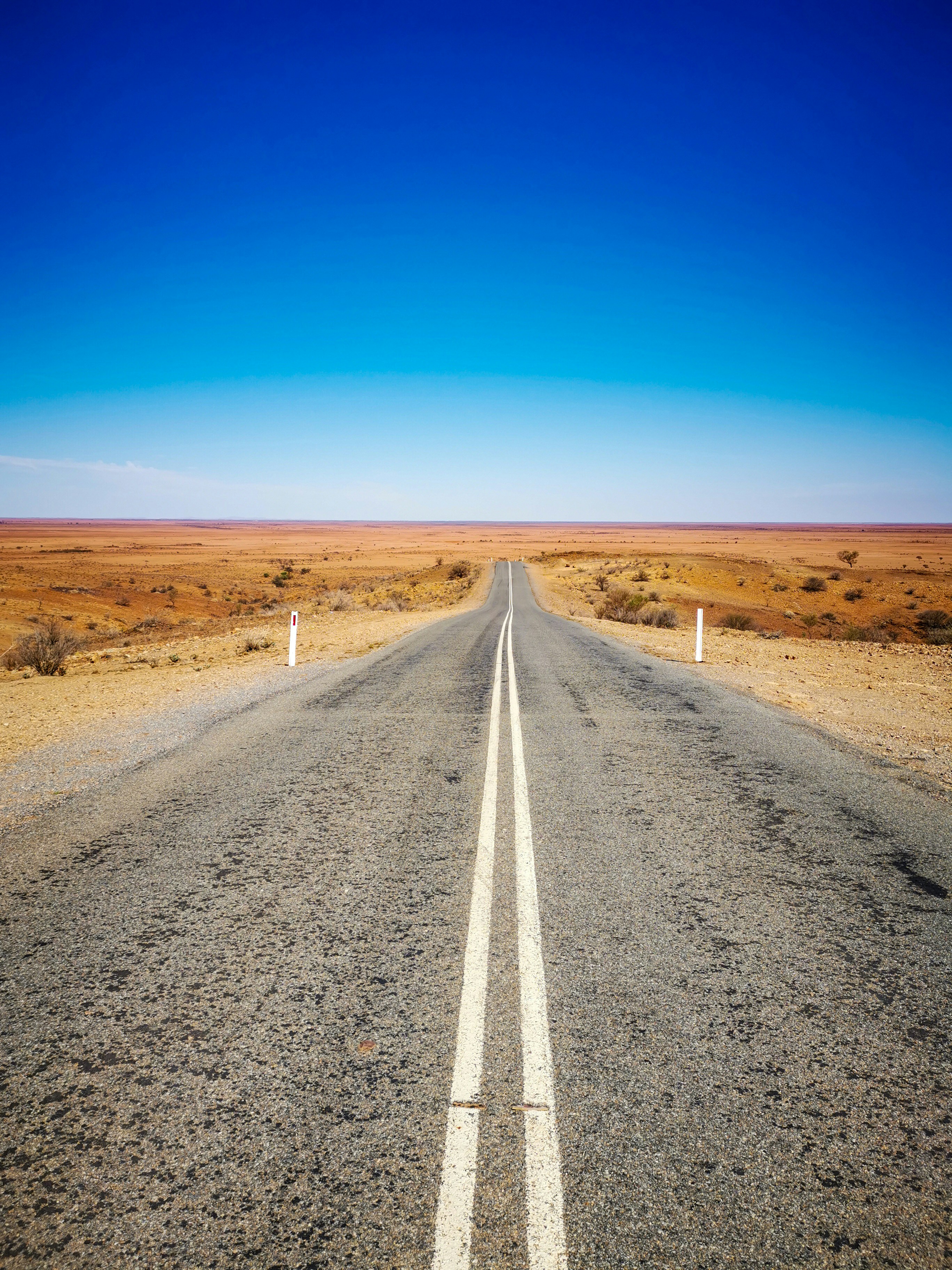
A long sealed run of the kind this entry measures: two lanes, a long sight line, and an hour with nothing in it to slow you down. This is the part of the day a mapping app measures accurately, and very nearly the only part it does.
Map hours are
not travel hours.
A mapping app gives you moving time under ideal conditions. A travel day is moving time plus everything that interrupts it, and the interruptions are not optional — they are the reason you drove instead of flying.
Our working habit is to take the quoted figure and add roughly a third before we believe it. A five-hour drive becomes a six-and-a-half-hour day. That single adjustment removes most of the panic from an itinerary, because the day now contains the stops you were always going to make.
The correction grows on unsealed surfaces, on roads with stock and wildlife, on holiday weekends, and anywhere the route threads through towns rather than around them.

The town stop that map hours never count: speed drops, a level crossing, a main street that is also the highway, wet asphalt at the lights. These are the ordinary minutes no route estimate carries, and they usually arrive at the end of the day, once the light has gone.
WHAT GETS ADDED
Fuel and food. Two proper stops on a long day, and neither is five minutes once there is a queue and a leg to stretch.
Photographs. Every lookout you actually pull into, plus the one you turn back for.
Roadworks. Single-lane control on a country highway is unpredictable by nature; assume you will meet it at least once.
Towns. Speed drops, a level crossing, a main street that is also the highway.
Loading and repacking. Sunscreen, water, the boot reshuffled at the third stop.
Getting it wrong. A missed turn, a closed campground, a detour around a flooded causeway.
Turning a route
into legs.
The order matters. Most over-packed itineraries are built by joining the places somebody wants to see and hoping the driving fits. Build the driving first and the places arrange themselves honestly.
01
Set the ceiling in hours, not kilometres.
Kilometres mean different things on a divided highway, a gravel corridor and a coast road with a hundred bends. Decide the number of hours you are willing to sit behind the wheel — for most travellers that lands somewhere between four and six — and treat it as fixed for the trip.
02
Cut the route where there is fuel, food and a bed.
A leg should end at a place that can absorb you if the day goes long or the weather turns. In settled country that is easy. Inland and in the north it is the constraint that decides the whole route, because the towns are spaced by history rather than by your convenience.
03
Put the longest leg early.
You are fresher in the first days than the last, and an early long haul buys slack for the rest of the trip. Ending a holiday with the biggest drive is how people arrive home more tired than they left.
04
Check every leg against sunset, not the clock.
Usable daylight changes by hours between a Tasmanian summer and a mid-winter afternoon inland. Work backwards from the hour the light goes and set the departure time from there — a six o’clock arrival in December and in June are different plans entirely.
Tiredness carries
over.
One long day is manageable. Three in a row is a different proposition, because the deficit does not reset overnight in an unfamiliar bed. Read the four panels beside this as one continuous week, not as four alternatives.
The day has
already overrun.
You stop noticing the country. The whole reason for driving has switched off.
You are calculating arrival times instead of looking for somewhere to eat.
The last stop was skipped to make up time — the clearest sign the plan was wrong, not the day.
Nobody is talking. On a good driving day the car is a conversation; on a long one it goes flat.
The light has changed. If you are chasing the sun to the horizon, the leg was too long when you drew it.
DAY ONE
A good drive, and it knows it.
Stops stay short, the light lasts, and the arrival time set at breakfast still looks credible at three in the afternoon.
DAY TWO
It starts later than planned.
Breakfast runs long, the first stop stretches, and the leg you trimmed on paper is back to full length by lunch.
DAY THREE
Concentration goes quietly.
Not dramatically: the drift, the missed turn-off, the feeling that the last hour has gone somewhere. Nobody in the car announces it.
THE FIX
Shorten the day after the long one.
Cut the day that follows a long one, and put a night somewhere you stay twice. The correction is structural — it is not a matter of trying harder.
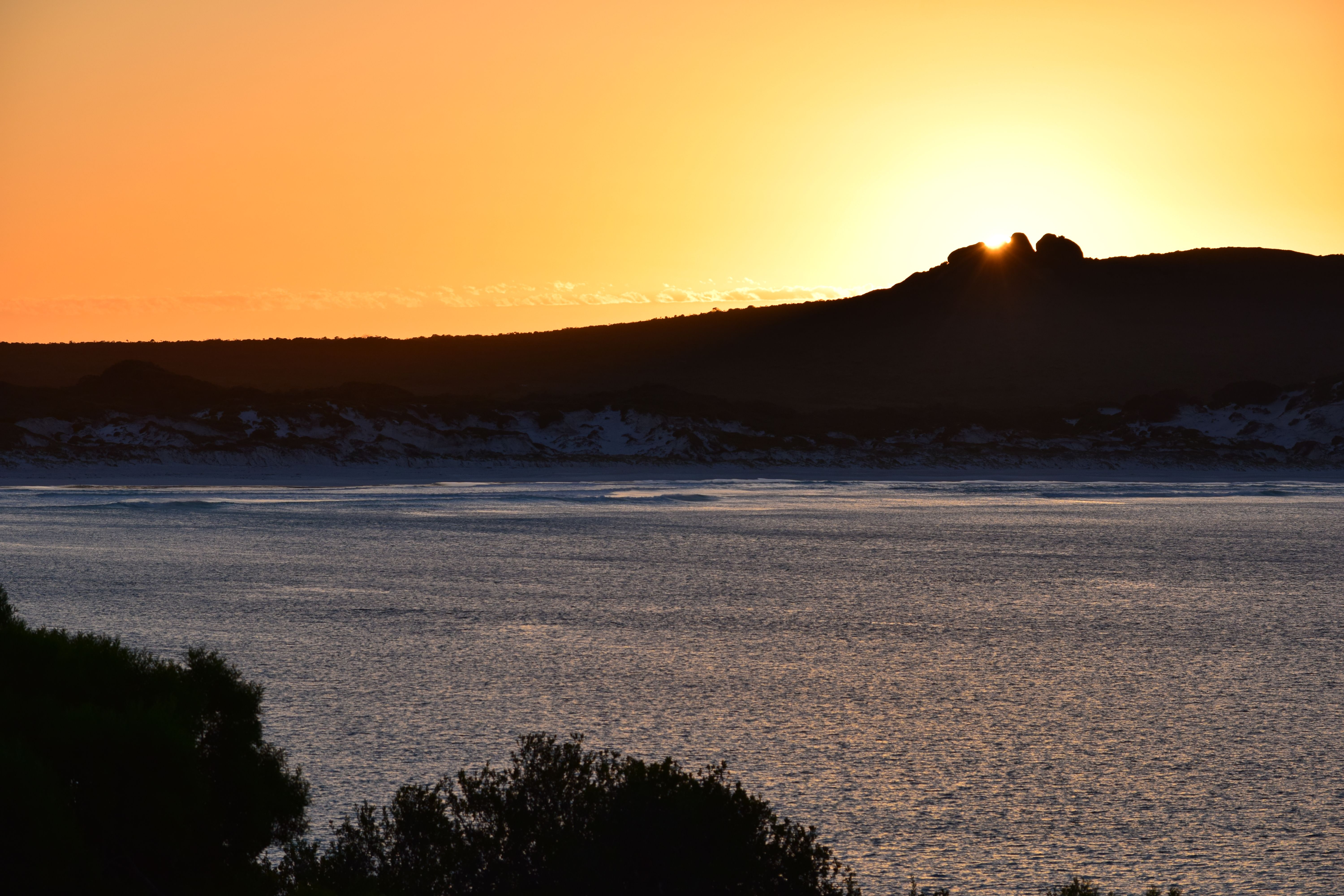
The hour this entry argues for giving away: the sun already on the water, the shoreline going to silhouette, headlights not yet doing any work. Deciding where the night ends before you decide when to leave is what keeps that last hour unclaimed.
Give away the hour
before dark.
Dawn and dusk are when kangaroos, wallabies, wombats and stock move toward feed and water, and they are also when a windscreen is hardest to read — low sun, long shadows, headlights that are not yet doing any work. On rural roads it is the riskiest window of the day, and it arrives precisely when a running-late itinerary wants one more hour of progress.
So we plan legs that finish with light to spare, and we treat an early start as a genuine start rather than a pre-dawn one. In practice that means booking the day around arrival, not departure: settle where you are sleeping first, then work back to a leaving time that leaves the last hour unclaimed.
The same logic argues against night driving in remote country, where a breakdown, an unfenced boundary or an unlit road train changes the situation entirely.
What we plan to,
and why.
These are planning ceilings, not speeds and not rules of the road — conditions, load, driver and the law decide the rest, and the only ceiling that counts on the day is the one your body sets.
The point of writing them down before the trip is that you never negotiate them at four in the afternoon, three hundred kilometres from the next town, with everyone tired and the light going. The six lengths below are the ones we build to, read left to right as the trip lengthens.
01
Sealed highway,
one driver
Around five hours of moving time, which becomes a six-to-seven-hour day once the stops are counted honestly.
02
Winding coast
or mountain road
Cut it to three or four hours. The map distance looks trivial and the day is not.
03
Unsealed or
remote sections
Plan short and arrive early, so surface and weather can rewrite the leg without wrecking the trip.
04
Arrival and
departure days
Half legs. Flights, hire desks and packing eat more of the day than anyone expects.
05
After two
long days
A short third day, or a second night in the same place. The deficit does not reset overnight.
06
Every third or
fourth driving day
A day that does not move at all — the single change that makes a long route enjoyable.
Read on before
you draw the route.
Australian Road Trips — how distance behaves across coastal, alpine and inland routes.
Trip Planning Basics — sequencing stops and turning an idea into an outline.
When to Go: Seasons and Timing — daylight, heat and holiday traffic, month by month.
Travel Styles: Solo, Family, Group — how pace changes with who is in the car.
The Journal — the rest of the entries.
CORRECTIONS AND QUESTIONS
Legs here are described in hours, not promises. If one of them reads differently from the drive you actually made, quote the line and name the road. Anything this entry leaves open can go to the contact form.